Senate Bill (SB) 1137 was signed into law on September 16, 2022. The bill establishes health protection zones (HPZ) around sensitive receptors (residences, schools, hospitals, etc.) located within 3,200 feet of oil and gas production facilities. The bill also prohibits new oil and gas drilling in the HPZs and requires operators within HPZs to develop Leak Detection and Response Plans (LDRP) and install continuously operating emissions detection systems (EDS). The Legislature has passed a series of related laws for various industries over the years, including hazardous waste landfills, oil refineries, metal shredding facilities, natural gas storage reservoirs, and CO2 sequestration reservoirs. The series of bills furthers a trend toward a world where all sorts of facilities that could potentially create air toxics concerns are required to actively monitor their downwind effects to prove they are not creating adverse effects.
The California Air Resources Board (CARB) hosted a public workshop on July 16, 2026 that discussed potential rule provisions to implement SB 1137. CARB’s draft regulatory concept includes a proposed 4-step process for operators to follow:
- Characterize Facility Emissions
- Conduct Air Dispersion Modeling
- Select & Site EDS, Set Alert Thresholds
- Conduct Ongoing Quality Assurance and Reporting
Step 1: Characterize Facility Emissions
CARB is proposing that an independent third-party will be required to perform compositional source testing and analysis at wells, processing equipment, glycol dehydrators, and storage equipment. The analysis must include Benzene, Toluene, O-Xylene, M-Xylene, P-Xylene, N-Xylene, and Hydrogen Sulfide and be conducted under USEPA Method 18, USEPA Method TO-15A, API MPMS Chapter 14.1, or ASTM D1945-14. The analysis will be used to identify the toxic of highest concern and the ratio of methane concentration to the concentration of that toxic. Methane may be used as a surrogate when the ratio of methane to toxic of highest concern is known and the proposed EDS meets performance standards.
Step 2: Conduct Air Dispersion Modeling
CARB is proposing to require air dispersion modeling be conducted for each facility following the Office of Environmental Health Hazards Assessment’s (OEHHA) Air Toxics Hot Spots Program Guidance Manual. Appropriate meteorological data must be incorporated to reflect accurate conditions. Operators will be required to develop LDRPs that must identify Reference Exposure Level (REL) leak rates from production equipment. A map of maximum 1-hour ground level concentrations of detection target throughout the HPZ will also be required. This dispersion modeling uses specialized software and skills but is fundamentally similar to the modeling that air consultants routinely conduct on other kinds of air emissions sources such as conventional industrial facilities.
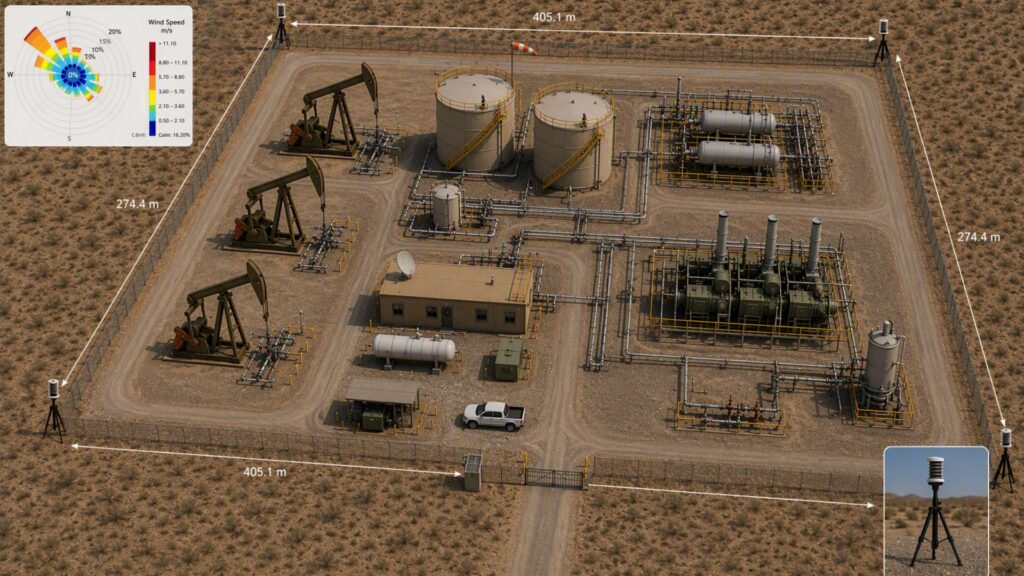
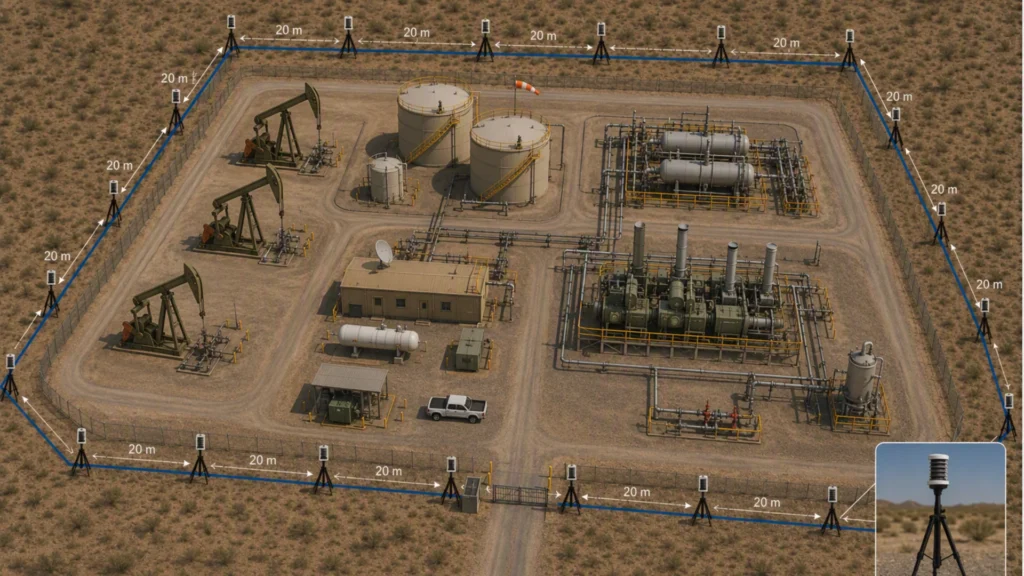
Hypothetical implementation of Emissions Detection System with and without air dispersion modeling.
Step 3: Select & Site EDS, Set Alert Thresholds
Each EDS must adhere to CARB-developed performance standards that include:
- annual uptime of at least 90%
- measurement intervals of one hour or less
- the ability to detect within one hour leaks transported towards sensitive receptors
- automatic transmission of public alerts based on detected concentration thresholds, air dispersion modeling, and baseline results.
Step 4: Provide Ongoing Quality Assurance
Each operator will be required to submit a Quality Assurance Project Plan (QAPP) for each LDRP. The QAPP must include data quality objectives, standard operating procedures, quarterly performance tests, and maintenance and repair plans. Independent audits will be required every 3 years.
CARB estimates that there are 21,000 wells and 7,300 tanks within HPZs that will result in 200 operators being subject to its SB 1137 regulations.
CARB is requesting the public submit alternatives that may yield the same or greater benefits than those associated with the proposed regulation or ones that may achieve the same goals at a lower cost.
Trinity can assist the regulated community with the interpretation of the draft regulations and help facilitate its participation in the rulemaking process. Should these rules take effect, Trinity will be able to complete or assist with all four steps described above, as needed. Please contact the Trinity Bakersfield office for more information at 661.282.2200.


