California’s Air Toxics “Hot Spots” Program does not set emission limits for toxic air contaminants. Instead, it evaluates the potential cancer and noncancer health risks that a facility’s emissions may pose to nearby receptors. The latest air toxics development is a re-evaluation of the cancer potency factors for acrolein and ethylene oxide. The state’s Office of Environmental Health Hazard Assessment (OEHHA) has circulated a draft technical support document proposing an acrolein cancer potency value for the first time. In addition, OEHHA has proposed a 34-fold increase in the current ethylene oxide potency factor.
If finalized, facilities with ethylene oxide or acrolein emissions will eventually be re-evaluated using the updated toxicity values, which could lead to higher prioritization scores, full Health Risk Assessments (HRAs), and risk reduction measures where calculated health risks exceed applicable district thresholds.
For some facilities, the impact may be limited. For others, especially those that handle ethylene oxide, use acrolein-containing products, operate certain chemical manufacturing or oil and gas processes, or operate large fuel combustion equipment close to residential receptors, the draft values are worth watching now rather than later.
What Is OEHHA and Why Does an IUR Matter?
OEHHA is part of California Environmental Protection Agency (CalEPA) and is the state agency responsible for assessing health risks from environmental contaminants. In the air toxics world, OEHHA develops health guidance values, including Inhalation Unit Risk factors (IUR), using scientific studies, epidemiology, toxicology, and dose-response methods. California Air Resources Board (CARB) and local air districts then use those values to evaluate, manage, and control air toxics risks.
California’s AB 2588 Air Toxics “Hot Spots” Program addresses toxics risks at nearby off-site commercial and residential structures and evaluate directly in terms of health risk. In comparison, most other states with air toxics programs set ambient concentration limits for each air toxic and evaluate those toxics concentrations at all off-site locations starting at the regulated facility’s fenceline. Under AB 2588, facilities are prioritized using emissions information, toxicity values, and proximity to nearby receptors. Prioritization is a conservative screening process used to determine whether a more detailed evaluation is needed. Note that in contrast to most other states, Facilities are generally categorized as low, intermediate, or high priority. High-priority facilities are required to prepare detailed HRAs, while intermediate-priority facilities may be evaluated further depending on district requirements. HRAs are more complex than prioritization scoring and use site-specific emissions data, source parameters, receptor locations, meteorology, and air dispersion modeling to estimate cancer risk, chronic non-cancer impacts, and acute non-cancer impacts. Prioritization scores are typically updated when air permits are modified and are also periodically re-evaluated by air districts.
Quantified toxic emissions tell you how much of a chemical is released. Screening and dispersion modeling tools estimate the resulting ground-level concentrations at points of interest. An IUR is not an emission limit; instead, the IUR for each compound helps estimate what the resulting ground-level concentration of that compound at those locations may mean for health risk. That means the facility’s actual emissions may not change at all, but the calculated risk can still change if an existing toxic is determined to be more potent than previously understood. This is why IUR updates can affect facility prioritization scores and trigger HRA requirements, public notices of elevated air toxics risk in an area, permit reopenings, and potentially risk reduction requirements (e.g. emission control retrofits) – all without a site taking any action to change its emissions. Additionally, OEHHA IURs are used in other kinds of risk evaluations, including California Environmental Quality Act (CEQA) analyses and potential Proposition 65 citizen suits. Historically, other IUR changes (notably those for diesel particulate matter) have caused significant change over time in how the state regulates emissions of those pollutants, and those changes have previously led to emission control retrofit requirements such as diesel particulate matter filters on diesel emergency generators when sited close to occupied neighboring structures.
OEHHA released draft IURs for acrolein and ethylene oxide (EtO) in May 2026, along with technical support documents outlining the methodology and studies performed to derive these draft IURs. The public review periods for the draft IURs have been extended to July 29, 2026. Comments on the draft IURs can be submitted through the OEHHA website for both acrolein and EtO.
What Is Changing for Acrolein?
Acrolein is a volatile organic compound associated with a variety of sources, including combustion processes, wildfire smoke, cooking operations, and chemical manufacturing. It is also used as a biocide and herbicide in agricultural, petroleum production, and water distribution applications, which may also result in acrolein emissions. CARB has also identified acrolein as one of California’s emerging air toxics of concern, which means it is receiving increased attention from state air toxics programs. International Agency for Research on Cancer (IARC) classified acrolein as “probably carcinogenic” to humans in 2021, meaning it likely causes cancer. OEHHA’s draft IUR is based on additional animal cancer data and low-dose extrapolation.
Historically, acrolein has been evaluated primarily using acute and chronic non-cancer Reference Exposure Levels (RELs). OEHHA is now proposing to add a cancer IUR of 7.9×10⁻⁴ per microgram per cubic meter, which would add a cancer-risk component to future evaluations.
To put that value in perspective, OEHHA’s press materials describe the draft statewide cancer risk estimates for acrolein as higher than benzene and similar in scale to the cancer risk estimated for diesel exhaust when it first became a major air toxics concern in the late 1990s. That comparison does not mean acrolein will be regulated exactly like diesel particulate matter, but it helps explain why the proposed value is receiving attention.
Facilities that directly manufacture, distribute, store, or use acrolein-containing products could see acrolein become a more significant contributor to overall risk evaluations. This will primarily include certain oil and gas, agricultural water distribution, biocide, demulsifier, and chemical manufacturing applications. Fuel combustion also causes small acrolein emissions, but these are only expected to be a major risk contributor in cases where large amounts of fuel are combusted in close proximity to neighboring structures.
Acrolein has also received attention through CARB’s Study of Neighborhood Air near Petroleum Sources (SNAPS) monitoring work in Lost Hills, an area of both major agricultural and oil and gas production. The monitoring found acrolein concentrations higher than those measured in other parts of the state and identified acrolein as a key driver of certain non-cancer health concerns in that community. While the current OEHHA proposal focuses on cancer risk rather than non-cancer effects, the broader regulatory interest in acrolein is one reason many facilities are paying close attention to the draft IUR.
Acrolein may also become increasingly relevant for facilities with significant combustion sources. The compound is generated during fuel combustion, and acrolein emission factors are available for most types of fuel combustion. This does not mean combustion facilities automatically face new requirements, but it does mean future acrolein evaluations are likely to extend beyond facilities that directly handle the chemical itself.
One of the largest uncertainties surrounding acrolein remains emissions quantification. There is currently no CARB-approved stationary source test method for acrolein. As a result, local air districts have historically implemented acrolein evaluations on a case-by-case basis. This creates uncertainty because acrolein may be associated with many source categories, while reliable source-specific emissions data are often limited. Additional information is available on CARB’s Acrolein Test Method Advisory and Data page.
That uncertainty matters because once OEHHA finalizes a cancer IUR, air districts may be expected to incorporate the value into their AB 2588 prioritization and risk evaluations. For facilities where acrolein is present primarily as a combustion byproduct, implementation questions may be straightforward. For facilities with direct acrolein use, emission rates may be less clear, and implementation may drive new testing requirements to reduce uncertainty around prioritization scores or HRA evaluations.
What Is Changing for Ethylene Oxide?
Unlike acrolein, EtO already has a California cancer risk value, but OEHHA is proposing to update it using newer scientific information, including EPA’s 2016 assessment and human occupational studies. The change is substantial: the existing California consolidated health value tables list EtO inhalation unit risk of 8.8×10⁻⁵ per microgram per cubic meter, while the proposed OEHHA draft value is approximately 3.0×10⁻³ per microgram per cubic meter, or about 34 times higher. If the draft IUR change is finalized, facilities that emit EtO will have substantially higher calculated cancer risks even if actual emissions remain unchanged.
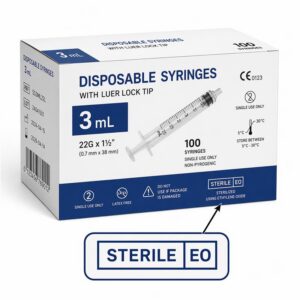
EtO is especially difficult from a regulatory and public health perspective because it is both a toxic air contaminant and a critical sterilant. The Food and Drug Administration (FDA) states that about half of sterile medical devices in the United States are sterilized with EtO, including devices ranging from wound dressings to stents. Many of those products are heat- or moisture-sensitive and cannot simply be switched to steam, radiation, or another sterilization method without validation and possible regulatory review.
The practical question for regulators, healthcare providers, and industry is how to reduce EtO emissions and community risk without disrupting access to sterile medical devices. Medical device manufacturers may produce equipment in clean-room settings and place products in EtO sterilization chambers. EtO is commonly routed to control equipment such as catalytic oxidizers or scrubbers, and well-controlled systems can achieve high destruction or removal efficiency. Even so, a much higher IUR can make residual stack emissions, fugitive emissions, sterilization chamber exhaust, and aeration room emissions more important in the risk calculation. This is why the discussion surrounding EtO extends beyond environmental compliance. Regulators, healthcare providers, and industry continue to balance emissions reductions and community risk concerns with the need to maintain access to sterile medical equipment. For additional context, see FDA’s medical device sterilization page and US EPA’s EtO sterilization NESHAP.
Note that while EtO measurement techniques are readily available, it is a technically challenging measurement. EtO’s extreme potency as an air toxic often makes extremely low detection limits necessary for measurement data to be useful. As such, Trinity’s air consultants have seen numerous cases of EtO measurements for stack testing and continuous emission monitoring systems (CEMS) needing to use expensive cutting-edge equipment and techniques to be capable of reporting low enough concentrations to indicate that there might not be a major air toxics problem at a facility.
What Does This Mean for California Facilities?
The draft IURs would not automatically create new permit limits; however, air district permitting programs may also need to consider the new values when evaluating projects that emit these pollutants. Additionally, CARB has indicated that air districts must incorporate a new final cancer IUR into risk evaluations when prioritizing facilities under AB 2588.
For facilities, the key issue is that health risk is cumulative. Acrolein or EtO may be only one component of the total toxic air contaminant (TAC) burden a facility imposes on its neighbors. A preliminary screening calculation that looks at one pollutant by itself can help explain the relative importance of a new IUR, but the actual facility results will depend on all TAC emissions, source locations, stack parameters, operating schedules, nearby receptors, and district-specific implementation. In other words, if an EtO sterilization facility also has large boilers in the building and a large diesel generator out near the property line and a neighbor’s building, the risks of each of those sources on neighboring structures are added together when determining if the overall sterilization facility’s impact on its neighbors is within acceptable limits.
Receptor proximity can be especially important. Under California Air Pollution Control Officers Association (CAPCOA) prioritization guidance, facilities located near homes, schools, businesses, or other sensitive receptors may receive higher screening scores than similar facilities located farther away. In some situations, site-specific modeling may be needed to fully understand the impact of the new toxicity values and determine whether screening-level assumptions are appropriately representative.
Combustion-heavy facilities should continue monitoring developments. Acrolein emissions factors are already available for most fuel combustion source types. The addition of a cancer IUR for acrolein will increase the prioritization score and cancer risk of combustion acrolein sources that have larger emission rates and/or close proximity to sensitive receptors. If future guidance expands acrolein testing methodologies, emissions estimation procedures, or combustion-source characterization approaches, some facilities could see broader implications for HRAs, CEQA analyses, and future permitting.
Because California HRAs are site-specific, the modeled outcome will depend on the source type, emission rate, emission release (stack) parameters, operating schedule, receptor distance, meteorology, terrain, and the air district’s implementation approach. This is especially important for acrolein because emissions estimation remains uncertain for some source categories. For facilities that directly use acrolein, implementation may be more straightforward. For facilities where acrolein is present primarily as a combustion byproduct, future CARB or district guidance on testing, emissions estimation, or source characterization could affect how acrolein is addressed in HRAs, CEQA analyses, and future permitting .
Trinity also expects that the new IUR values would be incorporated into broader evaluations of air toxics health risk, such as indications of communities overburdened by pollution in selection of disadvantaged communities under AB 617.
Who Should Pay Close Attention?
Facilities that should closely monitor these developments include:
- All facilities with fuel combustion that have previously been classified as high priority, intermediate priority, or have already been required to prepare an HRA, as the addition of an acrolein cancer IUR could increase calculated cancer risk
- EtO sterilization and aeration facilities
- Other facilities using EtO, such as medical device manufacturers and medical laboratories
- Acrolein manufacturers and distributors
- Oil and gas operations using acrolein-related chemistry
- Agricultural users and distributors of acrolein products
- Chemical manufacturing facilities
- Large fuel combustion sources including power generation, mining, aggregate, cement, and asphalt operations
- Projects undergoing CEQA review that are heavy on fuel combustion
What Should Facilities Do Now?
- Consider submitting technical comments before OEHHA’s July 29, 2026 public comment deadline.
- Review whether acrolein or EtO appears in site emissions inventories, Safety Data Sheets (SDS), HRA inputs, AB 2588 reports, or permit applications.
- Use strategic care and thought in actual emissions reporting processes to ensure that they do not overestimate or contribute to a district’s calculations overestimating facility EtO or acrolein emissions. Emission inventory data is eventually used later to calculate new prioritization scores and HRA results.
- Identify current or planned projects that may trigger permitting, CEQA review, prioritization scores, or HRA updates.
- For EtO users, review control systems, fugitive emission points, sterilizer/aerator exhaust, and applicable federal and California requirements.
- For combustion-heavy facilities, track CARB and district guidance on acrolein measurement, emissions estimation, and HRA implementation.
- Get strategic advisement on any emission testing that could test for or otherwise imply EtO or acrolein emission rates. Detection limits bear great attention when quantifying potent air toxics, as even tiny quantities of potent air toxics can still have large impacts. Cautious regulators will often treat a “non-detect” test result as half of the detection limit or the whole detection limit rather than zero. Both of these compounds are technically challenging to measure, and once a risk-averse regulator receives unfavorable stack test results, it is difficult to discredit those results even when they are scientifically unsound.
Conclusion
OEHHA’s draft values do not mean that facilities must immediately change operations, and they do not automatically impose new emission limits. They do, however, have the potential to change how risk is calculated once finalized. Facilities that directly use or emit EtO or acrolein should evaluate potential impacts now. Facilities with significant fuel combustion in populated areas should also track CARB and district guidance, particularly if acrolein measurement or emissions-estimation methods are updated in the future. Trinity is tracking the draft values, the public comment process, and implementation issues. Please contact Trinity’s experts Wes Younger, Raquel Pimentel Contreras, Charles Lee, Steve Walters, and Jake Risi if you have questions about whether acrolein or EtO may affect your permitting, AB 2588 reporting, HRA, CEQA project, emission testing, CEMS, or emissions inventory reporting.


